
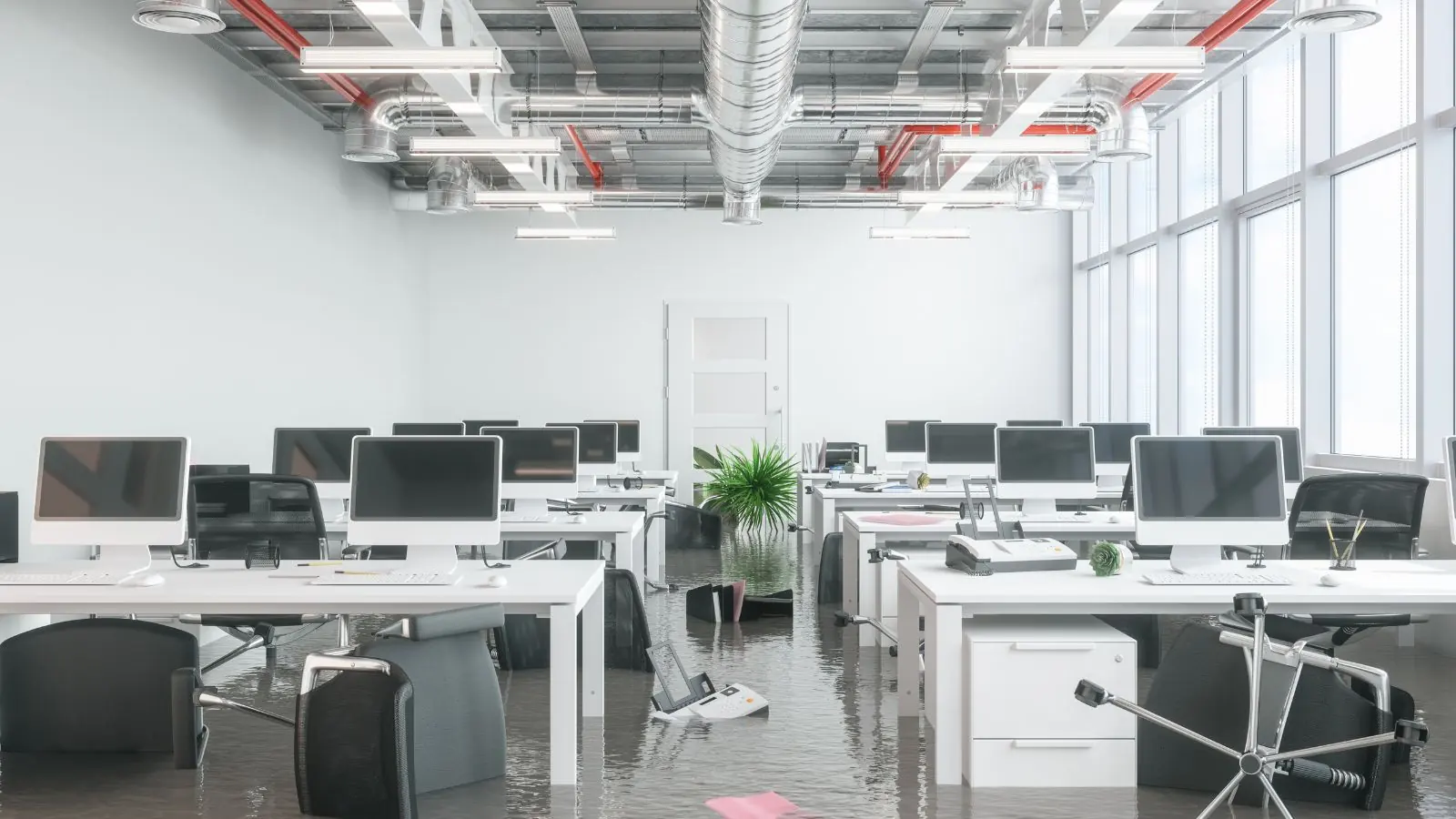
In Twentynine Palms, CA, commercial water damage restoration means pulling water out of a shop, office or other non-residential building, drying it, cleaning up, and keeping the records that an owner, a property manager and an insurer will want. The methods match residential work. The difference is who holds responsibility, how fast a space must reopen and how many parties are involved.
A leak does not check the clock, so dispatch runs 24/7 and sends a crew the same day when one is free. We dry, clean and restore. Plumbers, roofers and HVAC technicians fix the source, and large or code-regulated work needs licensed trades.
How water gets into business spaces in the desert
NOAA 1991 to 2020 normals show about 89.2 days a year with highs above 100 F here, so cooling equipment runs hard for months. Clogged condensate drains and overflowing pans on rooftop and ceiling units are a common slow source. A leak that drips for weeks stains ceiling tile and soaks insulation before anyone notices.
Most businesses here run on septic systems, because a 2022 LAFCO service review reported that the community has no municipal sewer. A restroom backup is a septic problem first and a cleanup second. For a plumbing break or standing water, emergency water extraction is usually the first step.
Flooring in commercial spaces and what water does to it
Floor type decides what can be saved and how long drying takes. Carpet tile can often be lifted and dried or replaced by the square. Glued-down materials and sealed concrete hold water differently, and the adhesive layer is usually where moisture hides.
| Floor type | What water does | Usual outcome |
|---|---|---|
| Carpet tile | Water collects in the backing and the seams | Tiles lifted, dried or replaced individually |
| Glued-down sheet carpet | Backing and adhesive hold moisture | Often removed if the water sat |
| Vinyl tile and plank | Water seeps under seams and loosens the glue | Lifted, subfloor dried, then replaced |
| Sealed or bare concrete | Water soaks in slowly and drains out slowly | Dried in place with dehumidifiers |
| Laminate | Edges swell when wet | Usually removed once swollen |
Water is still spreading? The dispatch line is open around the clock.
☎ Call (760) 769-1159Owner, tenant and landlord: who handles what
Broadly speaking, the building owner or landlord is responsible for the structure and the systems that serve it, while a tenant is responsible for their own contents, improvements and operations. Leases vary a great deal, so read yours before assuming. A property manager may have to approve work before a crew can begin.
A tenant should alert the landlord right away, take photos of the damage and list any lost stock or equipment. An owner should decide who authorizes work. Our crew coordinates with that person and explains scope and price first.
Safety for staff and customers
If water has reached outlets, panels, ceiling lights or equipment, treat the area as electrical. Turn power off only from a dry spot at the panel. For smoke, sparks, buzzing or a gas smell, leave and contact 911 or the utility before calling us. Close off wet floors, since slips are the most common injury in a water event.
If the water is sewage from a restroom or floor drain, close the restroom, keep people out and do not mop it. Rope off wet floors, damaged ceiling tile and fallen insulation until a crew has assessed them.
How a commercial job runs
Dispatch asks where the water is, what it came from and whether anyone is at risk. A crew arrives with pumps and extraction units if water is standing. They isolate what they can, then outline the wet area using meters and a thermal camera.
Wet material that cannot be saved is removed, and the rest is dried with air movers and LGR dehumidifiers on a daily schedule. The published industry reference for water categories and drying is ANSI/IICRC S500. Readings and photos go to the owner or manager, and the drying and damage-control scope is written out before work starts.
Licensed trades, large work and the building department
CSLB says a contractor license becomes mandatory once a job reaches 1,000 dollars counting both labor and materials. That limit rose from $500 effective January 1, 2025. Ask any contractor for a license number and check it with CSLB.
Larger rebuilds, electrical, plumbing and structural work can need permits and inspections. The city building department can tell you which permits apply at your address. We clean and dry. Licensed trades handle the regulated rebuild, and we work around them.
Mistakes to avoid and ways to prepare
Waiting for the next business day lets wet ceiling tile, carpet and drywall soak. NWS Phoenix says monsoon season officially runs June 15 through September 30, so check roof drains, entry thresholds and loading areas before then. Keep a list of shutoff locations and an after-hours contact for the building.
Do not throw away damaged stock or equipment before photographing it. We serve Yucca Valley and Joshua Tree businesses from the same dispatch line, so say where the property is.
What changes the cost of a commercial job
Business water jobs vary widely because the space, the access and the number of decision makers differ. These are the biggest drivers.
Floor area wet
More square feet means more extraction, more equipment and a longer drying period.
Flooring type
Carpet tile can be lifted and dried, while glued-down floors may need removal.
After-hours work
Work at night or on a holiday can change crew scheduling and labor.
Water category
Sewage and outside water bring containment, protective gear and disposal.
Access and shutdown
Occupied spaces, locked areas and equipment that must stay running slow the work.
A general note on insurance
Business policies differ from homeowner policies, so check your policy and ask your insurer. For a reference point, the state insurance department's residential guide calls sudden and accidental water damage covered and seepage generally not. Flood is usually excluded unless you carry separate flood coverage.
Ask your insurer whether your policy includes business interruption and what it requires, since that is an insurance question, not a restoration one. The source of the leak matters too. A plumber, roofer or HVAC technician fixes it, and we handle the water damage. Keep photos, receipts and the drying log.
Ask dispatch to explain the scope and price before any work starts. You decide before a crew touches anything.
Frequently asked questions
Is emergency commercial water damage restoration available in Twentynine Palms?
Yes. The line is staffed day and night, holidays included, and a crew is sent the same day if one is free. No arrival time is promised. Say what happened and who can authorize work.
As a tenant, should I call you or my landlord first?
Tell the landlord or property manager right away. If water is still spreading, call dispatch as well. Read your lease to see who authorizes work. Photograph the damage before anything moves.
Can you work around business hours?
Often yes. Tell dispatch when the space must be open, and the crew will plan around it where the water and safety allow. Some areas may need closing while wet.
Does restoration include the rebuild?
Our work covers extraction, drying and cleanup. Large rebuilds, electrical, plumbing and structural work need licensed trades and may need permits from the city building department.
Still have a question about your situation? Dispatch answers 24/7.
☎ Call (760) 769-1159