
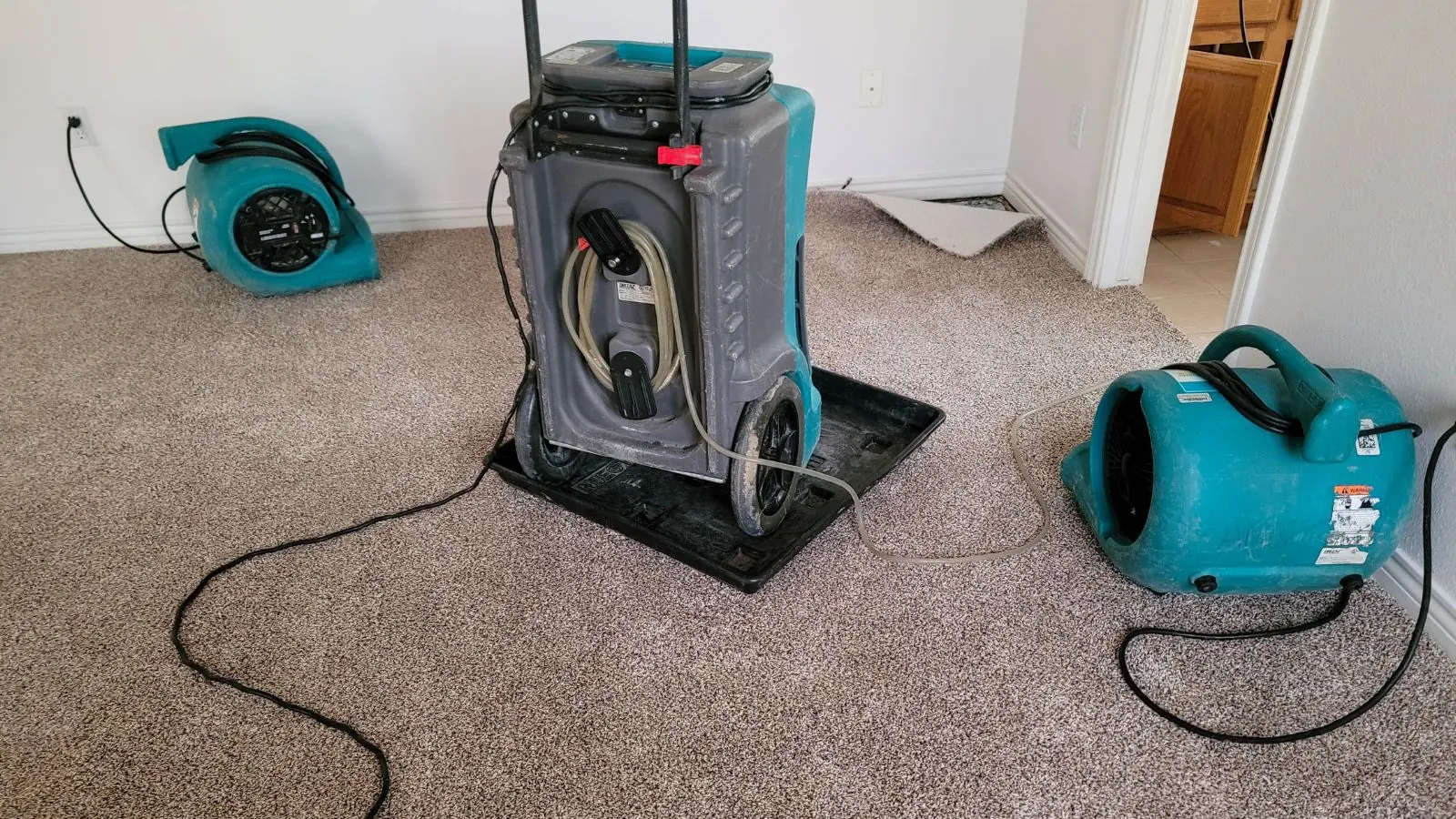
Structural drying and dehumidification in Twentynine Palms, CA is the controlled removal of moisture from framing, drywall, subfloor and concrete after the standing water has been extracted. It is a phase of its own. Crews measure it with meters, record it every day, and finish it when readings match a dry standard, not when surfaces feel dry.
It begins once the water is out and the materials that cannot be saved are removed. This page covers the drying itself, while the first 24 to 72 hours of damage control covers the emergency steps before it. If your house is wet right now, dispatch is open 24/7.
Why desert air does not dry a closed house on its own
Per NOAA normals for 1991 to 2020, the town averages roughly 3.87 inches of yearly precipitation, and its July average high reaches 104.0 F. It is easy to assume a wet house dries itself. It does not, because water trapped in wall cavities, under flooring and inside concrete leaves slowly, and dry outdoor air cannot reach it through closed walls.
Surfaces can feel dry within a day while the framing and subfloor stay wet. That hidden moisture is what causes cupped floors, swollen trim and musty odor later. If the damp stays, the next step may be mold inspection and testing, which is the secondary risk drying is meant to prevent.
Psychrometrics in plain words
Air holds water as vapor. Relative humidity is the percentage of that vapor the air could hold at its current temperature, so it changes when the temperature changes. Grains per pound measures the actual amount of vapor in each pound of dry air, which does not shift with temperature, and crews track it with relative humidity and temperature.
Moisture moves from wet material into drier air. A dehumidifier pulls vapor out of the air, which keeps the air dry enough to take more from the walls and floor. Air movers sweep damp air off surfaces so the dry air can reach them. Drying is this loop running until the material gives up what it holds.
Water is still spreading? The dispatch line is open around the clock.
☎ Call (760) 769-1159The equipment and what each piece does
Crews size the setup to room volume, materials and water category.
| Equipment | What it does | Where it is used |
|---|---|---|
| Moisture meters | Read moisture content in wood, drywall and concrete | Every wet room, every day |
| Thermal imaging cameras | Show cool, damp areas behind finishes | Walls, ceilings and floors before opening them |
| Air movers | Push air across wet surfaces to speed evaporation | Floors, wall bases, carpet and under flooring |
| LGR dehumidifiers | Pull water vapor out of the air at a steady rate | Closed work areas with a lot of moisture |
| Desiccant dehumidifiers | Dry air with a moisture-absorbing wheel | Very low humidity targets or dense materials |
| Drying mats and cavity ports | Move air through hardwood or wall cavities | Flooring that can be saved, hollow walls |
Safety steps for power and equipment during drying
Drying equipment needs steady power. Do not plug a damaged cord into a circuit, and never stand in water near a panel. If water touched outlets or appliances, cut power only if you can stand dry at the panel. For any gas smell or sparks, get out and ring 911 or the utility before us.
A local news report says a 2014 flash flood here brought down at least 14 power poles and left roughly 2,000 homes and businesses without electricity. When power drops, drying stops and moisture can climb again. Ask the crew what the plan is for an outage, and never run a generator indoors or in an attached garage.
Daily readings, drying logs and the dry standard
Crews map the wet area, take a starting reading in each material, and record temperature, relative humidity and grains per pound. They return each day to read the same spots again, adjust the equipment and write the numbers into a drying log. A falling trend means the plan is working, and a flat line means something is hiding.
The goal is a dry standard, meaning the reading of the same material in an unaffected part of your building. ANSI/IICRC S500 is where the industry publishes the idea. Ask for a copy of the log, since it also supports your claim.
What stretches or shortens drying time
No honest crew can name days before seeing the building. Several factors move the schedule.
- Density of the material. Concrete and hardwood release water far more slowly than drywall.
- How long the water sat and how far it spread into cavities.
- Water category, since contaminated materials are removed instead of dried.
- Whether the building can be closed and kept at a steady temperature.
Mistakes and prevention in a desert home
An evaporative cooler works by putting water vapor into the air, so running one during drying works against the equipment. Switch it off and ask the crew how to stay cool. Windows opened at night can let in warm air, or rain in monsoon season.
Do not pull equipment early because a surface looks dry. After storms, check roof and window seals. Crews dry homes in Joshua Tree and Yucca Valley with the same method.
What changes the cost of drying
Drying costs follow equipment and time, so two homes with similar leaks can differ. These are the main drivers.
Size of the wet area
More rooms and more wet wall length mean more air movers and dehumidifiers on the job.
Number of drying days
Equipment is used for days, and dense materials like concrete and hardwood keep it running longer.
Wall and floor access
Drying cavities may need ports or small openings, and dry-in-place floors may need mats.
Water category
Contaminated materials are removed instead of dried, which changes the scope.
Monitoring
Daily visits to read meters and update the log add labor but catch problems early.
A general note on insurance
Drying is usually part of the same claim as the loss that caused it. Coverage often applies to a burst or sudden accidental release of water, whereas a long, quiet drip is a different matter that policies often treat differently. Flood water from outside needs separate flood coverage, so check your policy or ask your insurer.
Plumbers repair pipes, roofers repair roofs and HVAC technicians repair leaking cooling units. We dry the structure afterward. The daily drying log and your photos give your insurer a clear record, and state insurance guidance says to keep records of cleanup and repair costs.
Ask dispatch how many days of drying your building may need. The scope and price are explained before equipment goes in.
Frequently asked questions
Is emergency structural drying available in Twentynine Palms?
Yes. Phone dispatch at any hour, holidays too. Same-day dispatch happens whenever a crew is open, but no arrival time is promised. Describe what got wet so the right drying equipment is loaded.
Can I just open the windows and let the desert air dry it?
It may help dry the surface of a room, but it does not reach water inside walls, under flooring or in concrete. You also cannot control the humidity or the dust that comes in. Measured drying with the building closed is more reliable.
Can I run my swamp cooler while the house dries?
It is best not to. An evaporative cooler adds water vapor to the air, which makes the dehumidifiers work harder. Ask the crew how to stay cool while drying runs.
How will I know the drying is finished?
The crew compares readings in the wet materials with the dry standard taken from an unaffected area of the building. When the log shows they match, the equipment comes out. Surfaces that feel dry are not enough.
Still have a question about your situation? Dispatch answers 24/7.
☎ Call (760) 769-1159